

Bolton’s industrial identity has been forged over centuries. From the cotton spinning mills that once made it one of the most productive manufacturing towns on earth to the modern engineering, construction, and logistics businesses that drive its economy today, Bolton has always understood the value of getting things built, made, and moved efficiently. That tradition of practical, hard-nosed industry is very much alive across Gilnow, Westhoughton, Farnworth, and the borough’s many active business parks — and it’s precisely why the conversation around chain hoists is increasingly relevant for businesses across the area.
If your operation involves lifting heavy loads as part of its daily routine and you’re still relying on manual methods or outdated equipment to do it, this article is worth your time.
Understanding What a Chain Hoist Brings to the Table
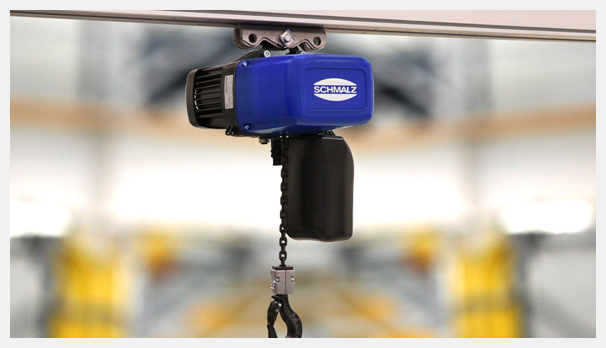
A chain hoist is an electrically driven device that lifts, lowers, and positions loads using a motorised chain mechanism controlled by a pendant unit. The operator maintains full control at all times from a safe working position, without needing to take the physical strain of the lift themselves.
What distinguishes a modern chain hoist from older lifting solutions is the combination of capacity, precision, and safety that today’s engineering makes possible. A well-specified chain hoist can handle loads of up to 2,000 kg repeatedly throughout a shift without performance degradation, and with safety features built into every stage of the operation. For Bolton’s engineering and manufacturing businesses, many of which work with heavy metal components, fabricated assemblies, or bulk materials on a daily basis, those characteristics translate directly into faster, safer, and more consistent production.
The True Cost of Outdated Lifting Methods
Most businesses are aware, at least in general terms, that manual handling carries risk. What’s less often examined is the full financial picture of that risk when it plays out over a period of months or years.
A single serious manual handling injury can result in weeks or months of absence, significant employer liability exposure, HSE investigation costs, and a lasting impact on the morale and confidence of the wider team. Multiply that by the statistical likelihood of injury in an operation where heavy lifting is routine, and the numbers become genuinely difficult to ignore.
There’s also an efficiency argument that sits entirely independently of the safety case. Manual lifting is slow, particularly when loads are heavy enough to require two or more operatives working together. It’s inconsistent, varying with individual capacity and fatigue levels. And it creates bottlenecks at exactly the points in a workflow where speed and repeatability matter most. A chain hoist eliminates all three of those problems simultaneously, often within days of installation.
The Schmalz SCH: Built for Bolton’s Working Environment
Not every chain hoist is fit for the kind of sustained, high-demand use that Bolton’s industrial businesses require. Cheap or underspecified equipment might handle lighter lifts adequately, but it tends to degrade under the repetitive loading cycles of a busy production environment, leading to increased maintenance costs and eventual reliability issues that cause more disruption than they save.
The Schmalz SCH Chain Hoist takes a different approach. Every element of the design has been engineered for longevity and consistent performance under genuine industrial conditions.
The helical gear drive system is central to that. Unlike conventional spur gearing, helical gearing produces noticeably smoother and quieter operation with lower vibration, making the hoist more comfortable to work with over an extended shift and reducing wear on the drive components over time. The gearbox is permanently lubricated and requires no routine maintenance, as does the DC magnetic brake, which is positioned behind the dual clutch system for maximum load protection without the servicing overhead that competing designs require.
Installation is designed to be straightforward. The plug and play connector system arrives pre-encoded, eliminating the risk of incorrect wiring during setup, and the 42V control voltage provides a meaningful safety margin in environments where moisture, dust, or other industrial hazards are present. Emergency stop is included as standard.
For operations requiring precise load placement, the gear limit switch delivers accurate, repeatable positioning at the end of the hook path. An optional frequency inverter extends this further, providing infinitely variable speed control across the full range of movement. The standard hook path of 3,000mm accommodates the majority of Bolton’s industrial facilities, with modified lifting heights available on request.
Turbo Vacuumentation Ltd: Supporting Bolton Businesses
Getting maximum value from a chain hoist investment starts with getting the specification right. Turbo Vacuumentation Ltd works with businesses across Bolton and the wider North West to identify the correct Schmalz solution for each application, taking account of load requirements, duty cycle, facility layout, and integration with existing crane or gantry infrastructure.
To find out more or discuss your specific requirements, visit: https://www.turbo-vac.co.uk/crane-systems/chain-hoists/