

In today’s competitive manufacturing environment, automation, efficiency, and precision are essential for maintaining productivity and profitability. Vacuum technology has become a cornerstone of modern industrial processes, enabling manufacturers to handle materials quickly, safely, and reliably. At the heart of these systems are specialised vacuum components that allow production lines, robots, and handling systems to perform complex tasks with minimal manual intervention.
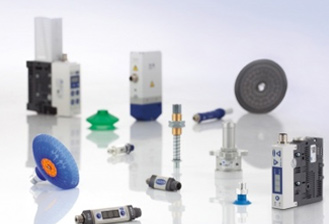
Turbo Vacuumentation Ltd provides a comprehensive range of vacuum components designed to support automation and material handling across industries including automotive, packaging, electronics, wood processing, logistics, and metal fabrication. These components—from suction cups and grippers to vacuum generators and monitoring systems—work together to create efficient, reliable vacuum systems that improve manufacturing performance.
This article explores the key vacuum components used in industrial manufacturing and highlights their uses, benefits, and practical applications.
Understanding Vacuum Technology in Manufacturing
Vacuum technology operates by creating negative pressure to securely grip, lift, or hold materials. Instead of relying on mechanical clamps or manual handling, vacuum systems use suction to manipulate products with precision and minimal contact.
This technology is widely used in automated production environments where speed, repeatability, and safety are critical. Vacuum components can be integrated directly into robotic systems, conveyor lines, or dedicated handling equipment, enabling seamless movement of materials throughout the production process.
Key Vacuum Components and Their Applications
Vacuum Suction Cups
Vacuum suction cups are one of the most widely used components in vacuum handling systems. Designed with flexible elastomer materials and connection fittings, they create an airtight seal on a surface to lift or hold objects securely.
Uses
- Handling glass sheets and panels
- Moving sheet metal and plastic parts
- Packaging and palletising products
- Pick-and-place automation in robotics
Benefits
- Gentle handling of delicate materials
- High grip strength on flat or slightly curved surfaces
- Reduced risk of product damage
- Suitable for a wide range of shapes and materials
Manufacturers rely on suction cups because they provide consistent and repeatable gripping performance in high-speed automated environments.
Special Grippers
Special grippers are designed for applications where traditional suction cups cannot generate a sufficient vacuum seal. These grippers use alternative designs or gripping mechanisms to handle complex shapes, porous materials, or irregular surfaces.
Applications
- Handling rough or textured surfaces
- Gripping small or irregular components
- Automated assembly operations
- High-speed robotic picking
Benefits
- Customised solutions for challenging materials
- Increased automation capability
- Improved reliability for difficult gripping tasks
These grippers enable manufacturers to automate processes that would otherwise require manual intervention.
Vacuum Area Grippers
Vacuum area grippers are advanced gripping systems capable of handling multiple products of varying shapes and sizes using a single gripping surface. These systems are particularly useful in automated palletising and logistics operations.
Applications
- Automated palletising and depalletising
- Warehouse sorting and order picking
- Handling cardboard, wood, plastic, and metal sheets
Benefits
- Flexibility to handle mixed product sizes
- Reduced tooling changeovers
- Increased throughput in automated systems
Area grippers are widely used in robotic applications where efficiency and versatility are required for dynamic production environments.
Mounting Elements
Mounting elements play a critical role in integrating suction cups and grippers into a complete vacuum system. They provide structural support, flexibility, and adjustability for optimal positioning.
These components include jointed mountings, spring plungers, suspension systems, and holders that ensure accurate alignment with workpieces.
Benefits
- Adaptation to uneven or sloped surfaces
- Shock absorption and vibration control
- Reduced wear on suction cups
- Quick installation and flexible system design
By enabling precise positioning, mounting elements improve both system durability and gripping performance.
Vacuum Generators
Vacuum generators are responsible for creating the vacuum pressure needed to operate the system. They can operate pneumatically (using compressed air ejectors) or electrically via pumps and blowers.
Applications
- Robotic pick-and-place systems
- Packaging machinery
- CNC machining and clamping
- Automated material handling
Benefits
- Fast vacuum generation for high cycle times
- Energy-efficient operation
- Compact designs suitable for decentralised systems
- Reliable suction even in dynamic processes
Advanced vacuum generators also include intelligent functions for energy monitoring and process control.
Valve Technology
Valves regulate the flow of vacuum and compressed air within a system. Choosing the correct valve technology ensures precise control of gripping and release functions.
Benefits
- Improved system reliability
- Reduced air consumption
- Faster response times
- Enhanced process control
In automated environments, valves enable precise coordination between robotic movements and vacuum gripping operations.
Switches and System Monitoring
Modern vacuum systems incorporate sensors and monitoring devices to ensure optimal performance and reliability.
Key Features
- Vacuum level monitoring
- Energy consumption tracking
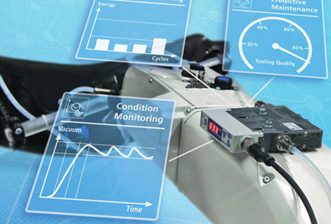
- Predictive maintenance diagnostics
- Process transparency
These systems provide real-time feedback, helping manufacturers detect leaks, maintain efficiency, and avoid unexpected downtime.
Filters and Connections
Filters and connection components are essential for maintaining vacuum system integrity. Filters remove contaminants that could damage vacuum generators or reduce system performance.
Benefits
- Protection of sensitive equipment
- Improved system lifespan
- Reduced maintenance requirements
- Reliable vacuum performance
Properly designed connections also ensure airtight sealing throughout the vacuum system.
Benefits of Vacuum Components in Industrial Manufacturing
Implementing high-quality vacuum components offers a wide range of operational advantages.
Increased Automation
Vacuum systems enable fully automated handling processes, reducing reliance on manual labour and increasing productivity.
Improved Workplace Safety
Vacuum lifting reduces manual lifting and repetitive strain injuries, creating a safer working environment.
Higher Efficiency
Automated vacuum handling systems can significantly increase production speeds while maintaining consistent quality.
Reduced Product Damage
Gentle suction-based handling minimises the risk of scratching, denting, or damaging delicate materials.
Energy Efficiency
Modern vacuum technology includes energy-saving features such as air-saving ejectors and intelligent system monitoring.
The Future of Vacuum Technology in Industry
As manufacturing continues to evolve towards smart factories and Industry 4.0, vacuum technology is becoming increasingly intelligent and integrated. Modern vacuum components can connect to digital monitoring systems, enabling predictive maintenance, remote diagnostics, and real-time process optimisation.
With the ability to improve automation, efficiency, and safety across production lines, vacuum components will remain a key technology driving innovation in manufacturing.
Vacuum components play a vital role in modern industrial manufacturing by enabling efficient material handling, automation, and process reliability. From suction cups and specialised grippers to vacuum generators and monitoring systems, each component contributes to a powerful and flexible vacuum system.
By offering a comprehensive range of high-quality vacuum components, Turbo Vacuumentation Ltd supports manufacturers across multiple industries in optimising their handling processes, improving productivity, and building smarter, more efficient production environments.
As manufacturing demands continue to grow, vacuum technology will remain an essential solution for businesses seeking reliable and innovative automation tools.